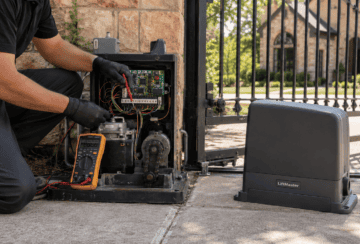
Trying to decide whether to repair or replace gate operator equipment can be difficult when the cause is still unclear. A failed remote or misaligned sensor may need a simple repair. Repeat failures, unavailable parts, or outdated safety hardware may make replacement the better option. A hands-on diagnosis should come before either decision.
A gate operator is the motor, drive mechanism, and control board that move your sliding or swing gate. It is not the gate itself. The gate is the physical structure, usually built by a fence company or metal fabricator, and it generally needs far less regular attention than the operator does. The operator is the mechanical and electrical system doing the actual work, and it wears out the way any motor-driven equipment does.
That distinction matters because a lot of gate trouble gets blamed on “the gate” when the real issue is the operator or one of its supporting parts: a remote, keypad, sensor, or control board. Knowing which layer failed is the starting point for deciding what to do next. A1 Gate Guys works on the equipment that automates existing sliding and swing gates, including common gate operator issues that come up on residential properties.
A few patterns show up again and again with automatic gate operators:
None of these symptoms tells you by itself whether you are looking at a small repair or a larger problem. That is the point of a proper diagnosis.
Repair tends to be the more sensible option when the failure is isolated to one component and the rest of the system checks out.
A dead remote battery, loose chain, dirty or misaligned photo-eye sensor, tripped breaker, or worn limit switch can often be addressed without replacing the motor or control board. If the operator has been reliable and the diagnosis traces the problem to one of these parts, repair is often the straightforward answer.
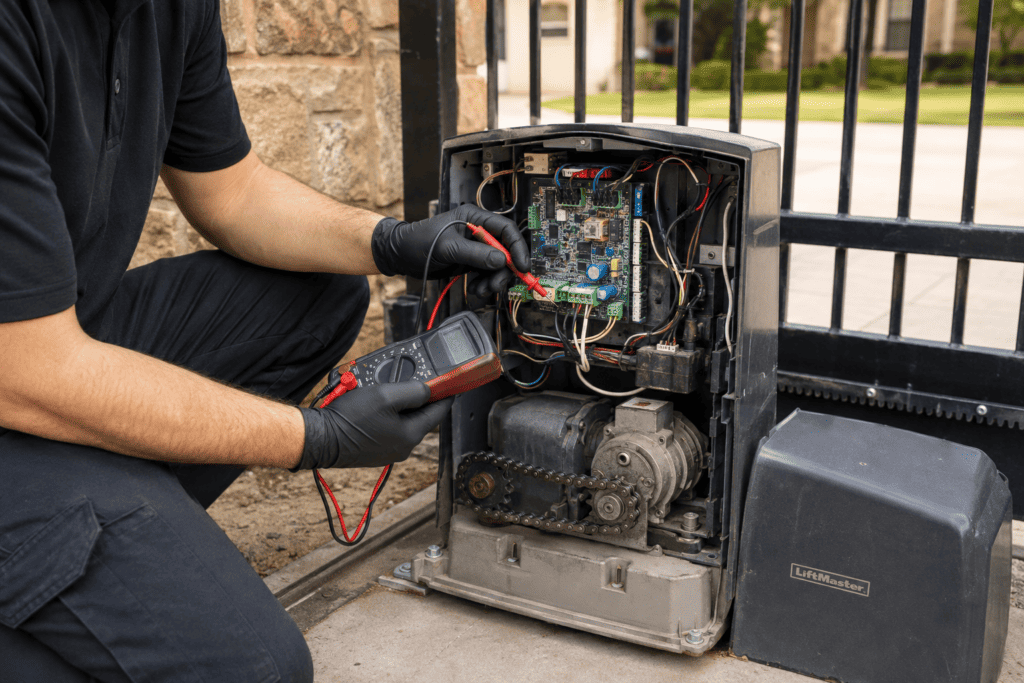
Repair also makes sense when the operator is relatively recent and the manufacturer still supports parts for it. Replacing a control board or motor on a newer unit is a different conversation from making the same repair on an older model with limited support.
Replacement tends to be the better answer in a smaller set of situations, but they are worth naming clearly.
The motor or control board may have failed rather than a peripheral part such as a sensor or remote. These are major components, and the cost and availability of the correct part can change the value of repairing an older unit.
The operator may also have experienced several unrelated failures within a short period. One breakdown is a single event. A pattern of different failures can indicate broader wear that deserves a closer look.
Replacement may also make sense when the unit lacks needed entrapment-protection hardware and cannot accept the correct equipment, or when parts for the specific brand and model are no longer reasonably available.
It is tempting to treat every repair as an isolated decision. In practice, a more useful question is not only “what broke this time?” but also “how often has something broken?” Several repairs over a short period can reveal a pattern that one failure cannot.
A technician can compare the current failure with earlier problems, listen for changes in the motor, and inspect the control board for wear beyond the part that failed. That context turns a repair-or-replace decision into an informed choice rather than a guess.
Age alone is not a reliable rule for replacing a gate operator. How long a unit keeps running well depends on maintenance history, environment, and use as much as its age. What age affects more consistently is parts availability.
Manufacturers eventually stop producing parts for older operator lines. Even when parts exist, older models can require a longer distributor search instead of a routine order. A part for a current-production model is generally easier to source than one for an older or discontinued line. In some cases, the search and repair can become impractical compared with installing a current operator built for the same gate type.
A useful question to ask is not simply “How old is my operator?” Ask, “Can this specific model still be repaired with parts that are reasonably available?”
Automatic gates move with real force. The industry addresses that risk through UL 325, a safety standard covering entrapment protection for gate, door, and window operators. The requirements for a particular gate depend on the operator type and the entrapment zones created by the installation. It is not one fixed checklist that applies the same way to every gate.
According to UL 325 safety guidance published by LiftMaster, compliant systems use monitored safety devices, such as photo-eye or contact-edge sensors, at the entrapment zones identified for that installation. The exact setup varies by operator and gate configuration.
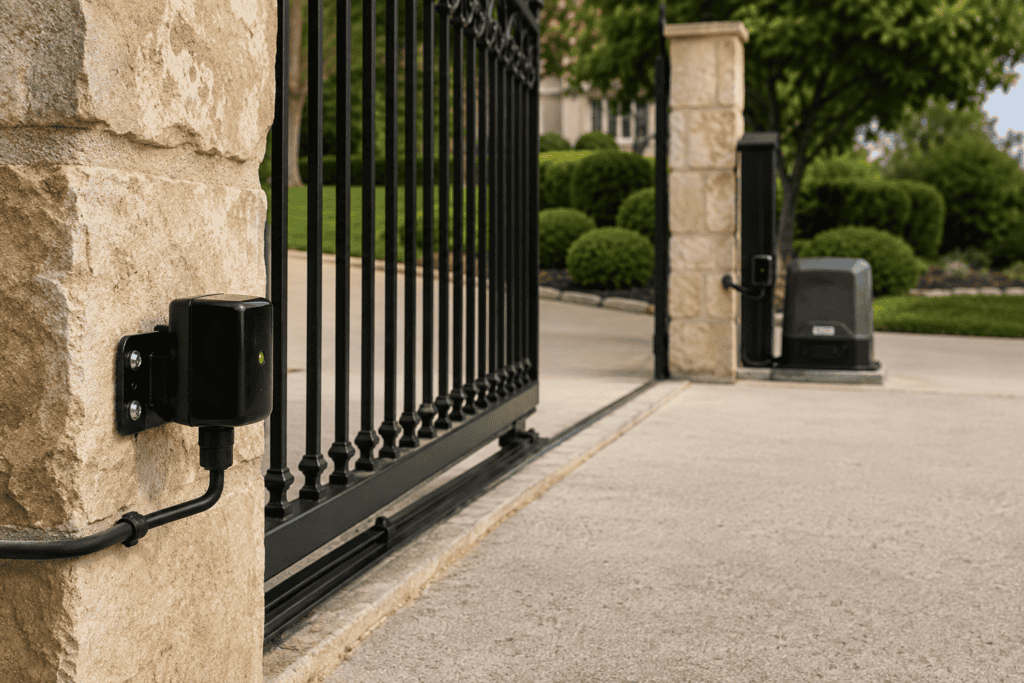
The U.S. Consumer Product Safety Commission has documented deaths and serious injuries tied to older automatic gates that lacked adequate sensing and reversing hardware. In a 2002 CPSC safety announcement, the agency explained why updated entrapment-protection requirements mattered. The CPSC also participates in the technical panel that maintains UL 325, as described on its gate-operator voluntary standards page.
If an older operator cannot be fitted with the safety devices required for its installation, that is a legitimate reason to consider replacement even when the motor still runs.
If a diagnosis points toward replacement, it is worth looking beyond a simple match for the old unit.
As an Authorized LiftMaster Dealer, A1 Gate Guys can help homeowners evaluate LiftMaster operator options. The team also repairs most major gate operator brands, so having a non-LiftMaster operator does not automatically mean replacement is the only path.
Access components may also need attention because remotes, keypads, and sensors connect to the operator and control board. Replacement can be a practical time to consider phone-based access along with a traditional remote or keypad. The A1 Gate Guys gate operators page covers the decision points involved in selecting equipment for an existing gate.
The gate type determines the operator category. Review the differences between sliding gate operators and swing gate operators. Gate size, weight, usage, and the installation environment also affect the correct choice.
A useful diagnosis is not a guess made from a description over the phone. A technician should inspect the operator, gate movement, wiring, and safety hardware in person. The explanation should cover what failed, why it failed, and what realistic options remain, using plain language.
If someone recommends full replacement without explaining what failed and why repair is not reasonable, a second opinion may be worthwhile. The same is true in reverse. Replacing the same part repeatedly without addressing why it keeps failing leaves the underlying cause unresolved.
These questions can help clarify the decision:
If your automatic gate refuses to close, stalls partway, or makes a new noise, a hands-on look at the operator can help identify the cause and clarify whether repair or replacement makes sense.
Contact A1 Gate GuysThe gate is the physical structure. The operator is the motor, drive mechanism, and control board that automate its movement. A1 Gate Guys works on the operator and its related access components.
Note exactly what the gate is doing: not opening, opening but not closing, stopping partway, or moving with noise or resistance. Each pattern suggests different causes, but an on-site diagnosis is the reliable way to confirm the problem.
An occasional repair for a sensor, remote, or limit switch can reflect normal wear. Several different failures in a short period deserve a closer look at the whole system.
It depends on the operator and its control board. Some systems accept an add-on module. Others require newer equipment for phone-based access. A technician can confirm compatibility.
Monitored devices such as photo-eye or contact-edge sensors can stop and reverse a gate when they detect an obstruction. The required number and placement depend on the operator and installation.
Someone generally needs to provide access to the operator and wiring. If you cannot attend, confirm the access arrangement when scheduling the visit.
No. Age affects parts availability, but maintenance, use, environment, overall condition, and safety compatibility also matter. A diagnosis should consider the specific model and installation.
Often, yes. Compatibility depends on the brand, model, receiver, and control board. A technician can verify which access components will work with the existing operator.
A small issue can place more strain on other components or interfere with normal operation. Addressing a new symptom early can help prevent the problem from becoming harder to diagnose.