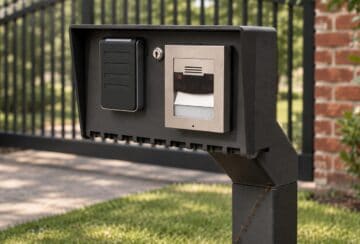
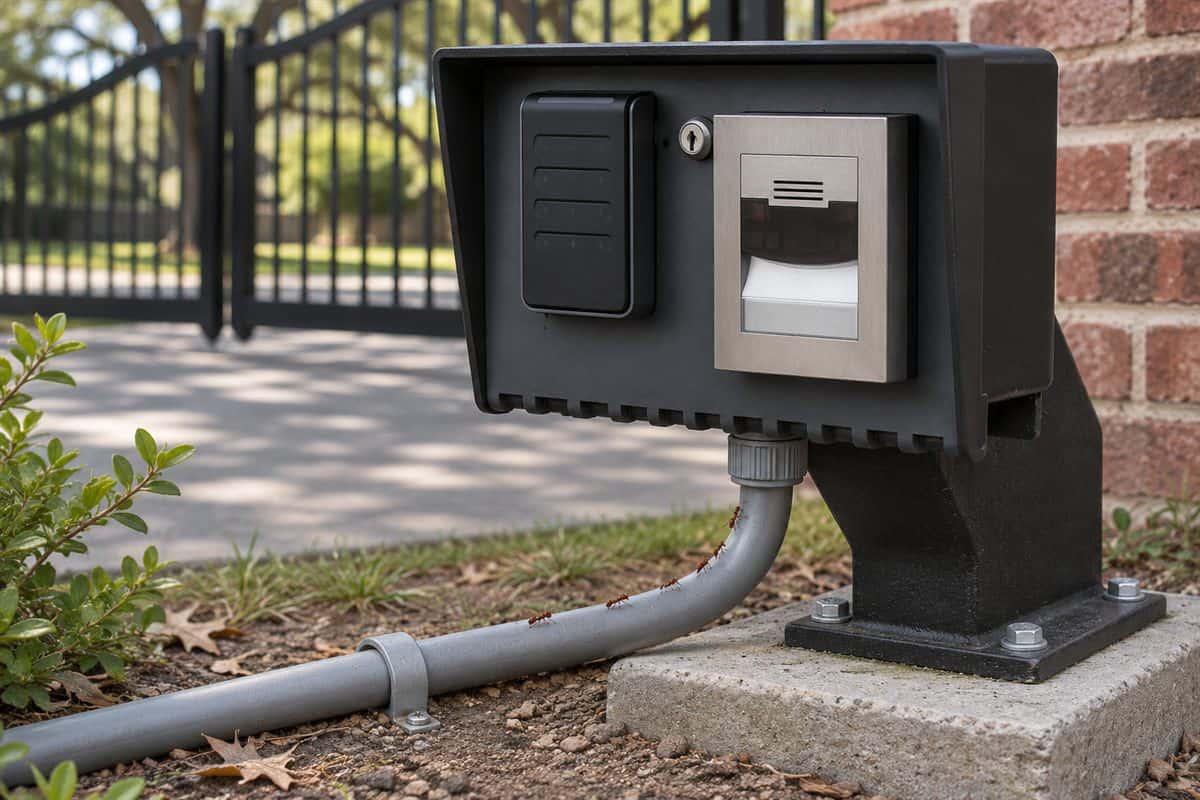
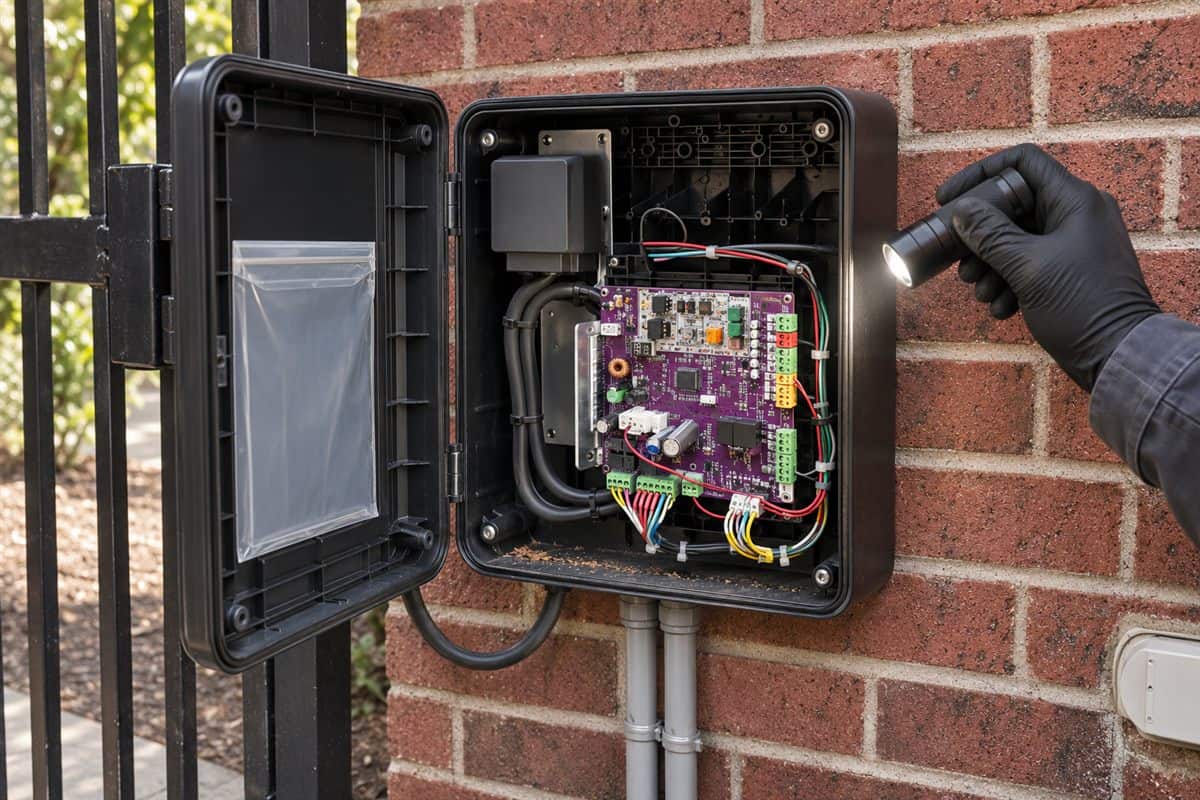
Ants in a gate opener often show up in one of two ways. You notice a trail of ants climbing the keypad post or following the conduit into the operator. Or the gate starts acting up, and the technician who opens the cover finds soil, a nest, or dead ants inside.
A gate operator is the motor and control unit that moves the gate. Its control box, the enclosure that holds the circuit board and wiring, is a dry, sheltered space close to the ground. That makes it attractive to ants, especially fire ants. This guide explains why ants move in, what they can damage, what homeowners and property managers can safely check, and which steps belong to a professional.
Ants get into gate openers because the housing offers shelter close to the ground, and fire ants in particular are drawn into electrical equipment. Once a colony settles in, foraging workers keep moving in and out through small gaps around covers, conduit, and cable entries.
Texas A&M AgriLife Extension’s fact sheet on managing red imported fire ants in electrical equipment and utility housings (ENTO-020) describes this problem in equipment such as air conditioners and traffic signal boxes. Its authors explain that these housings provide warmth in winter and a dry nesting site during heavy rains, and that foraging workers have an affinity for electrical fields and switching mechanisms. The fact sheet does not name gate operators specifically. A gate operator’s control box, a keypad housing, and a junction box at the gate are similar outdoor electrical enclosures, though, so the same concerns are worth applying.
Gate equipment also sits close to the soil. Operators are mounted on pads beside lawns and landscape beds, keypads sit on posts in planting islands, and conduit runs underground between them, giving ants several paths inside.
Ants are not the only pests that look for shelter in gate equipment. Rodents nesting under an operator cover cause their own problems, as our article on how mice get into an automatic gate operator explains.
Ants can damage a gate opener by shorting or blocking electrical contacts, chewing insulation, and carrying in soil that can corrode components. The result can range from intermittent problems to equipment that stops working.
The AgriLife fact sheet describes several ways fire ants harm electrical equipment:
In gate equipment, that kind of damage can show up in several ways. The operator may stop responding. A keypad may ignore some or all buttons. The gate may work one day and not the next. None of these symptoms proves ants are the cause, because the same signs can come from power, wiring, remotes, or the control board. Our overview of common gate operator issues covers those other possibilities.
Ants often appear in places you can see before they cause a failure. Photo eyes, the small sensors that watch the gate opening, sit low to the ground and can collect webs and nests, as our guide to the 7 most common electric gate issues describes. Keypad housings, operator covers, junction boxes, and the base of posts are other common entry points.
You can often spot an ant problem from the outside before anyone opens the equipment. Look for activity on and around the gate hardware from outside the gate’s travel path, with the gate stopped.
LOOK FORAnts trailing up the post or in and out of gaps
POSSIBLE MEANINGAnts may be nesting in or foraging through the keypad
LOOK FORAnts entering under the cover, loose soil at the edges
POSSIBLE MEANINGA colony may be using the operator housing
LOOK FORTrails following conduit, soil at openings
POSSIBLE MEANINGAnts may be traveling into the equipment through cable paths
LOOK FORMounds against the pad, post, or junction box
POSSIBLE MEANINGA nearby colony is close enough to move in
LOOK FORNests, soil, or webs across the lens
POSSIBLE MEANINGThe sensor may be blocked or contaminated
LOOK FORIntermittent operation, dead keypad buttons, no response
POSSIBLE MEANINGPossible electrical interference, but other causes are also possible
Heavy ant activity plus a misbehaving gate is a reason to call for an inspection, not proof of the cause.
Homeowners can safely observe, keep their distance from active colonies, and reduce ant pressure in the surrounding yard. Anything inside the equipment belongs to a professional.
Safe steps for homeowners and property managers include:
Routine checks help, too. Our article on automatic gate maintenance recommends checking the operator box for insects and making sure its seals keep out water and debris. Mighty Mule’s gate opener maintenance guide likewise tells owners of its openers to keep the control box clean and protected from water and insects, and to turn the power switch off before cleaning. Those instructions apply to that manufacturer’s products, so check your own owner’s manual for your model.
Leave anything that involves opening the equipment, touching wiring, or treating the inside of a housing to trained professionals. The AgriLife fact sheet recommends letting an electrician or a licensed pest management provider treat infested electrical equipment, with electrical service turned off first.
Do not attempt these steps yourself:
An ant problem in gate equipment can call for two kinds of help. A licensed pest professional can treat colonies in and around the equipment with products labeled for that site. A gate technician can safely shut the equipment down, remove soil and debris from the housing, look for chewed wiring and corroded contacts, and test whether the operator, keypad, and safety devices work correctly. If parts are damaged, the technician can explain repair and replacement options.
The order matters. Cleaning out a housing while an active colony remains nearby can mean the ants move right back in, and the AgriLife fact sheet notes that reducing fire ants in the larger landscape lowers the chance of infestation.
You can reduce the chance of a repeat problem by keeping the area around the equipment clean, keeping covers seated, and watching for activity before it reaches the electronics.
Gate operator housings and control boxes offer shelter near the ground, and Texas A&M AgriLife Extension notes that foraging fire ant workers have an affinity for electrical fields and switching mechanisms. Equipment surrounded by lawn or landscape beds gives colonies an easy path inside.
They can. AgriLife’s fact sheet explains that fire ants can chew insulation, cause short circuits, interfere with switches, and carry in soil that corrodes components. A technician should inspect the board and wiring after an infestation.
No. Spraying liquids into electrical equipment is hazardous, and AgriLife specifically advises against liquid drenches or sprays around electrical fixtures. Only use products labeled for the site, and leave treatment inside equipment to a licensed professional with the power off.
It can reduce the pressure. AgriLife notes that baits applied to individual mounds usually provide control in about a week, and that reducing fire ants in the larger landscape lowers the chance of equipment infestations. Ants already inside the equipment still need professional attention.
Often both. A licensed pest professional handles treatment, and a gate technician inspects and repairs the operator, keypad, wiring, and safety devices. Ask both to coordinate so the equipment is cleaned after the colony is under control.
Ants in a gate opener can turn a pest problem into an equipment problem, so treat them as both. Watch for trails and mounds near the equipment, keep liquids and tools out of the housing, and use only labeled products in the yard.
If you see ants in your gate equipment or your gate has started acting up, contact A1 Gate Guys or call 469-277-8333 to ask about an inspection. Let us know what you have seen and whether a pest professional has already treated the area.