Deep Dive: The 7 Most Common Electric Gate Issues - A1 Gate Guys
Deep Dive: The 7 Most Common Electric Gate Issues
- May 24, 2026
- Posted By Robert Hughes
1. The Remote Control Doesn’t Work
While a heavy-duty driveway gate is built to last for decades, your remote control clicker is not. If your gate suddenly stops responding to commands, the remote is the most common culprit. Remote controls rely on standard batteries that naturally drain, and their signals can sometimes be disrupted by local frequency interference.
- The Fix: Always keep spare batteries on hand. If a fresh battery does not solve the issue, check if the gate opens via the keypad or your smartphone app. If those work, your remote’s internal circuitry may be damaged, and you will need to purchase a replacement clicker or have a technician reprogram it to your gate operator receiver.
2. Pests Blocking the Photo-Eye Safety Sensors
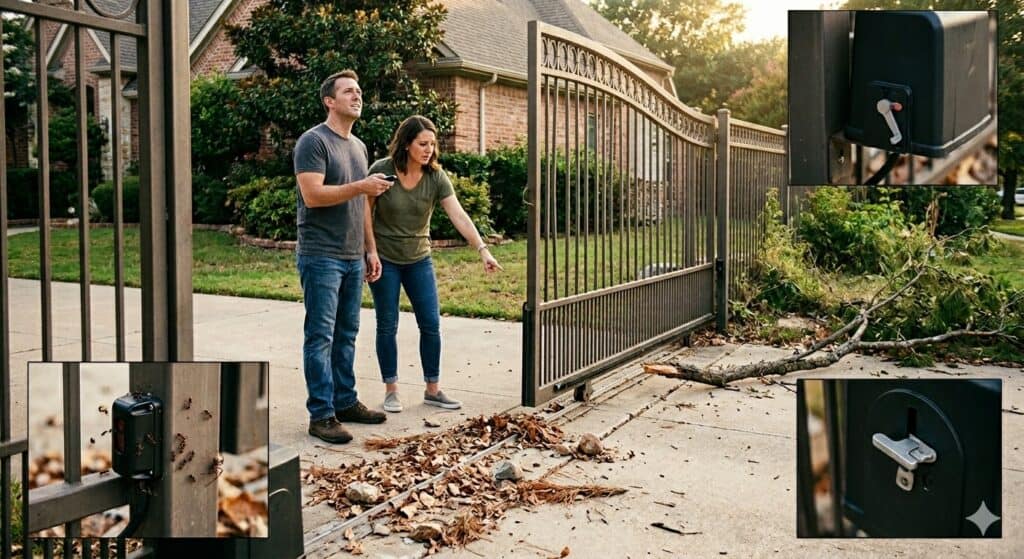
Automatic gates utilize sensitive photo-eye sensors to prevent the gate from closing on vehicles, pets, or pedestrians. Because these sensors are positioned close to the ground, they are prime real estate for Texas pests. Spiders, ants, and mud daubers frequently build nests or webs across the sensor lenses, tricking the gate into thinking there is a permanent obstruction in its path.
- The Fix: Wipe down the safety sensor lenses gently with a clean, dry microfiber cloth. If insects have crawled inside the actual housing of the sensor, do not spray water or harsh chemicals inside. Call a professional local gate repair team to clear the housing without short-circuiting the delicate wiring.
3. The Gate is Making Excessive Noise (Grinding or Squeaking)
A quiet, smooth hum is normal for a healthy electric gate, but loud grinding, squeaking, or crunching noises indicate an urgent issue. Over time, friction wears down the moving parts, and continuous exposure to wind and rain washes away essential lubricants.
Expert Warning: Ignoring a grinding gate will quickly destroy your gate operator motor, turning a simple maintenance task into an expensive replacement.
- The Fix: Apply a high-quality, gate-approved silicone or lithium lubricant to the hinges, rollers, and chains. Avoid using standard WD-40, as it attracts dust and dirt, which worsens friction. If the grinding noise persists after lubrication, the internal motor gears or bearings may be failing and require an expert inspection.
4. Debris Jamming the Guide Track
If you have a sliding driveway gate that moves sluggishly, stutters, or stops abruptly halfway through its cycle, look down at the ground. Leaves, twigs, gravel, mud, and acorns easily accumulate inside the metal guide track, obstructing the gate’s heavy wheels.
- The Fix: Make it a monthly habit to clear the track. Use a stiff-bristled broom or a leaf blower to sweep the entire length of the track clear of debris. Keeping a frictionless path prevents unnecessary strain on your gate opener.
5. The System is Stuck in Manual Mode
Most automatic gates feature a manual override for emergencies or power grid failures. Occasionally, after a gate has been manually opened, it can become stuck in manual mode, refusing to re-engage with the automatic motor drive. This is often caused by a failing alignment or a mechanical disconnect within the motor arm clutch.
- The Fix: Ensure the manual release lever or key is turned completely back into the “locked” or “engaged” position. If your gate operator arm has snapped or bent due to high winds or an accidental vehicle impact, it will prevent re-engagement. Contact a repair specialist to inspect and realign the motor arm mechanism safely.
6. Dealing with Power Outages & Storms
Severe Texas storms and unpredictable grid issues can leave your electric gate completely unresponsive. Unless your system is equipped with a functional solar or battery backup system, a total power loss means your gate won’t move, potentially locking you inside or outside your property.
- The Fix: Familiarize yourself with your specific gate’s manual override process before an emergency happens. Test your manual release key or lever every few months to ensure it moves smoothly and isn’t rusted shut. If you frequently experience power issues, ask a technician about installing a reliable LiftMaster battery backup system.
7. Worn, Bent, or Damaged Tracks
If you have cleared away all visible debris but your sliding gate is still dragging, jumping, or moving at a snail’s pace, the metal track itself may be compromised. Years of heavy iron or wooden gates rolling over the same metal path can cause the track to warp, sink, or split.
- The Fix: Do not attempt to force the gate closed using the motor, as a warped track can cause the gate to derail completely, posing a serious safety hazard. Track replacement and realignment require heavy lifting and precise welding, making this strictly a job for a professional gate technician.
Pro Tip for Maximum Gate Longevity
Preventative maintenance is always cheaper than emergency repairs. Having a certified technician inspect, lubricate, test safety reverse loops, and adjust your gate hardware once a year will stop the vast majority of these problems before they ever start.
Professional Automatic Driveway Gate Repair in Plano & DFW
When troubleshooting at home doesn’t solve the issue, turn to the local experts. A1 Gate Guys specializes in prompt, reliable, and affordable residential and commercial electric gate repair services across Collin County, Denton County, and the entire Dallas-Fort Worth metroplex.
Whether your slide gate limits are stripped, your swing gate operator arm is broken, or your automatic gate needs a comprehensive safety tune-up, our mobile service teams arrive fully equipped to get your system back in perfect working order on the very same day.
Our Local Service Area Includes:
- Plano, TX
- Frisco, TX
- McKinney, TX
- Allen, TX
- Dallas, TX
- …and surrounding DFW communities!
Need Fast Help? Call the certified technicians at A1 Gate Guys today at (469) 277-8333 to schedule your annual maintenance or troubleshoot your automatic gate system immediately!